




Protein energy bars: how to choose and make them at home
Table of contents
- Energy bar vs protein bar: what's the difference?
- 5 criteria for choosing a protein energy bar
- Recipe 1: whey-oat protein bars (no-bake)
- Recipe 2: date-almond energy bars for endurance
- Recipe 3: chocolate-coconut protein bars (vegan)
- When to eat your protein bar: timing guide
- Qnt protein bars: a convenient alternative
Last updated: April 2, 2026
You're standing in the supplement aisle. Energy bars, protein bars, high-protein bars, vegan bars... The selection has never been wider, yet the choice has never been more confusing. How do you know which one matches your goals? And what if the best option was simply making them yourself? This guide gives you the keys to choosing your protein energy bars wisely — plus 3 easy homemade recipes.
Energy bar vs protein bar: what's the difference?
An energy bar provides quick fuel — high in carbohydrates (40-60g per bar), often made with dried fruits, cereals, and honey. A protein bar focuses on high protein (20-40g) with low sugar, targeting muscle recovery or satisfying snacking.
| Criteria | Energy bar | Protein bar |
|---|---|---|
| Protein | 3-8g | 20-40g |
| Carbs | 40-60g | 10-25g |
| Sugar | 20-35g | 1-5g |
| Calories | 200-300 kcal | 150-250 kcal |
| When? | During exercise | Post-workout or as a snack |
| For whom? | Endurance, long-duration sports | Strength training, weight management |
5 criteria for choosing a protein energy bar
1. Protein content
The ISSN recommends 1.4-2.0g/kg/day for active individuals (Jäger et al., 2017). Aim for 15-20g protein per bar minimum.
2. Sugar content
Under 5g per serving. Check for hidden sugars (glucose syrup, dextrose, maltodextrin).
3. Protein quality
Whey isolate stimulates MPS faster than casein or soy (Tang et al., 2009). For vegan: look for pea + rice blends.
4. Clean ingredients
Fewer is better. This is the biggest advantage of homemade bars.
5. Value for money
Calculate cost per gram of protein, not price per bar.
Recipe 1: whey-oat protein bars (no-bake)
Simple and rich in protein with Metapure Whey Isolate Zero.
Ingredients (8 bars): 100g rolled oats, 60g whey protein (2 scoops Metapure), 80g peanut butter, 60ml milk, 1 tbsp honey, 30g dark chocolate chips.
Instructions: Mix dry, add wet, press into lined pan, refrigerate 2+ hours, cut into 8 bars.
Per bar: ~190 kcal | 15g protein | 18g carbs | 7g fat. Storage: 5 days fridge, 3 months freezer.
Recipe 2: date-almond energy bars for endurance
Ingredients (10 bars): 200g Medjool dates, 80g almonds, 30g whey, 40g oats, 2 tbsp cocoa, 1 tbsp coconut oil, pinch of salt.
Instructions: Blend dates, pulse in almonds, add remaining ingredients, press, refrigerate 3 hours, cut.
Per bar: ~170 kcal | 8g protein | 24g carbs | 6g fat. Ideal for: running, cycling, hiking.
Recipe 3: chocolate-coconut protein bars (vegan)
Ingredients (8 bars): 80g plant protein, 60g desiccated coconut, 80g almond butter, 60ml agave, 40g cocoa, 30ml coconut milk, vanilla.
Instructions: Mix dry, add wet, press, refrigerate 3 hours, cut. Optional: dark chocolate coating.
Per bar: ~200 kcal | 14g protein | 14g carbs | 10g fat.
When to eat your protein bar: timing guide
- Before training (30-60 min): Choose an energy bar (carb-rich)
- After training (within 2h): Protein bar — research supports 20-40g protein post-workout (Morton et al., 2018)
- As a snack (mid-morning/afternoon): Protein bar replaces sugar-heavy snacks
- On the go: Convenient protein source (not a meal replacement)
Key takeaway: Distributing protein across the day (3-5 servings of 20-40g) matters more than exact timing (Jäger et al., 2017).
QNT protein bars: a convenient alternative
Made in Belgium since 1992. Over 30 years of sports nutrition expertise.
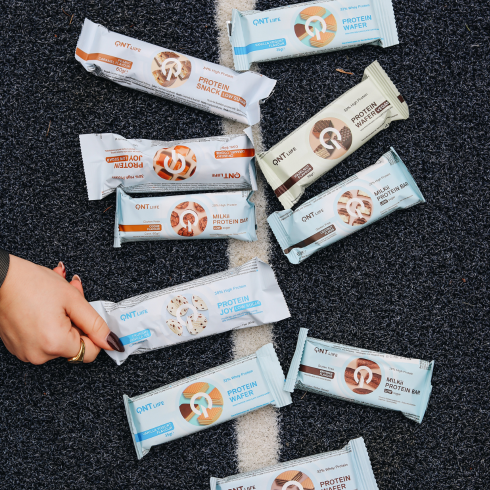
| QNT Bar | Protein | Sugar | Ideal for |
|---|---|---|---|
| Protein Joy | 38% | 2.2g | Indulgent snack, post-workout |
| Metapure 40% Crunchy | 40% (26g) | Low | Cutting, weight management |
| Protein Snack | 34% | 2g | Daily snacking |
| Protein Wafer | 30% | Low | Light, crunchy |
| Vegan Protein Bar | Plant + L-carnitine | Low | Plant-based athletes |
See our complete protein bar buying guide. Explore our protein bar collection.
By the QNT Sport team — Over 30 years of expertise in sports nutrition
Keep reading
 Recipes
Protein tiramisu and whey desserts: 5 gourmet recipes
Tiramisu protéiné, mousse, cheesecake : 5 recettes gourmandes avec whey QNT. Macros, astuces et science pour vous régaler sans culpabiliser.
 Recipes
Cheat meal: how to enjoy it without ruining your progress
Cheat meals can boost motivation without wrecking your results. Discover the 3-step method, common mistakes, and the science behind smart refeeds. ...


