
Skip to content
Cart

Your cart is empty

Continue shopping

Omega 3

50 years ago, children were already being given cod liver oil to improve their health, but many were put off by the taste. Yet the approach was relevant. Today, you can continue to give your body what our ancestors tried to pass on to us, but without worrying about the taste. Our fish oil-based Omega 3s are in capsules and no longer have this drawback.

2 products

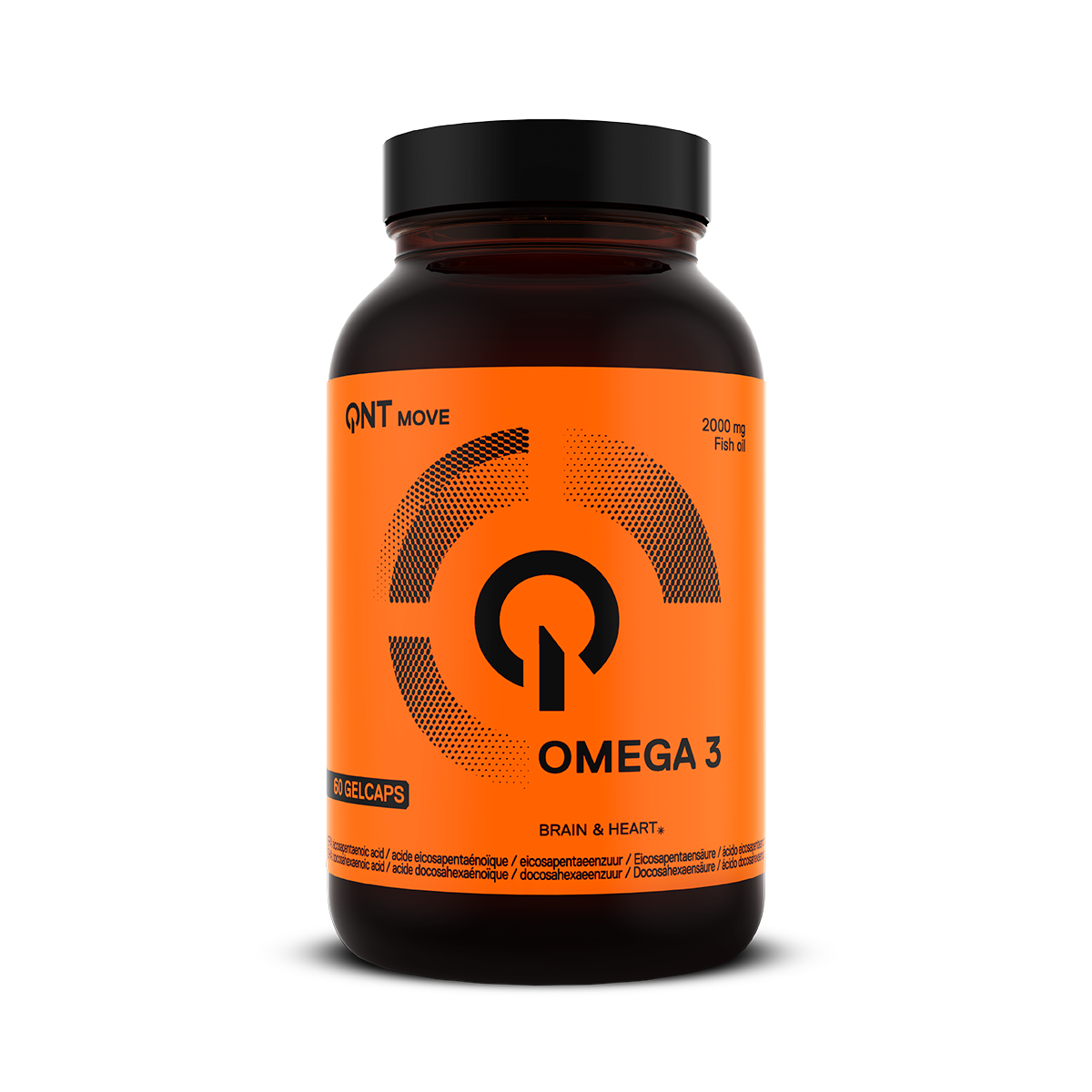
Save 15% QNT Move Omega 3 food supplement, omega-3 fatty acids with EPA and DHA in capsules
Sale price14,88 € Regular price17,50 €
Save 10% QNT OMEGA 3 - 3000 mg, omega-3 EPA and DHA in capsules
Sale price20,03 € Regular price22,25 €
Filters
Sort by
Price
to
Omega-3 EPA and DHA: why take it and how to choose

Omega-3: what exactly is it?

Omega-3 fatty acids are essential: your body cannot make them on its own, so you have to get them from food or from a supplement. There are three main types:

  • EPA (eicosapentaenoic acid) and DHA (docosahexaenoic acid), the long-chain, directly active forms found in oily fish and fish oil.
  • ALA, the plant form (flax, walnuts, rapeseed), which the body only weakly converts into EPA and DHA.

That is why omega-3 supplements focus on EPA and DHA, which are already active. At QNT, Omega 3 1000 mg and Omega 3 3000 mg deliver both of these fatty acids from a filtered fish oil for consistent quality. EPA and DHA contribute to the normal function of the heart (from 250 mg per day), and DHA contributes to normal brain function as well as the maintenance of normal vision. A steady daily intake is the foundation of any wellness routine, whether you train hard or simply stay active.

Omega-3, omega-6, omega-9: what is the difference?

A lot of people look up omega 3 6 9 benefits without knowing what sets them apart. The distinction is simple:

  • Omega-3: essential fatty acids that the modern diet often supplies in short measure. These are the ones worth topping up.
  • Omega-6: also essential, but already plentiful in our diet (vegetable oils, processed foods). We rarely get too little.
  • Omega-9: not essential, because the body can make it itself (it is also found in olive oil). So if you are wondering what is omega 9, it is the one type you do not need to supplement.

The real issue, then, is not total quantity but the omega-6 to omega-3 ratio, which is often skewed toward omega-6. Rebalancing it comes down to fewer ultra-processed foods and a better intake of omega-3 EPA and DHA. That is exactly the job of a targeted supplement like QNT Omega 3: it reinforces the weak link (your omega-3), not the omega-6 or omega-9 your plate already covers.

The benefits of omega-3 for athletes

If you train regularly, omega-3 has a clear place in your routine. Intense effort puts the body under load, and a solid intake of EPA and DHA supports several functions that matter day to day for an athlete.

What strength and endurance athletes tend to value:

  • Recovery: as part of a balanced diet, omega-3 fits naturally alongside loading phases and stretches of back-to-back training, next to a protein intake such as a whey.
  • Heart under load: EPA and DHA contribute to the normal function of the heart (from 250 mg per day), a useful marker for endurance sports.
  • Focus: DHA, a major component of nerve cell membranes, contributes to normal brain function, which helps you stay sharp in the gym.

Omega-3 replaces neither your diet nor your training: it complements an active lifestyle. For an athlete who eats little oily fish, it is one of the simplest and most logical supplements to add.

How much omega-3 per day?

The question comes up again and again: how much omega-3 per day? The most useful official marker concerns EPA and DHA: it is from 250 mg per day of combined EPA and DHA that they contribute to the normal function of the heart. That is the baseline for a maintenance intake.

Active people and athletes often aim for a higher EPA and DHA intake, spread across the day for better tolerance. A few practical pointers:

  • Daily maintenance: a steady intake is enough to round out a diet that is low in oily fish.
  • Heavier training blocks: a higher dose can be favoured over a few weeks.

The effects build over time: consistency matters more than a one-off dose. Keep your use sensible and stick to the serving stated on the product label. If you are on medication or unsure, ask a healthcare professional before increasing the amounts.

When and how to take your omega-3 capsules

Good news: with omega-3, timing is flexible. Unlike a post-workout whey or a pre-workout, there is no magic hour. The key principle: take your capsules with a meal that contains some fat, because omega-3 are fatty acids and are absorbed better that way.

In practice:

  • With a meal (lunch or dinner), with a little fat on the plate.
  • Split it up if your intake is high: part at lunch and part in the evening improves digestive comfort.
  • Every day, without breaks: it is consistency that makes the difference over time.

Omega 3 1000 mg comes as a capsule and Omega 3 3000 mg as an easy-to-swallow softgel. Store the box away from light and heat to protect the quality of the fish oil. Pair the dose with a meal you already eat so you never forget your softgel.

Omega 3 1000 mg or 3000 mg: how to choose?

QNT offers two omega-3 formats, both built on filtered fish oil for consistent quality. The right one depends on the intake you are after and how you prefer to take it.

  • Omega 3 1000 mg (60 capsules): the ideal entry format for a daily maintenance intake. Perfect if you are just starting out or simply want to round out a diet that is low in oily fish.
  • Omega 3 3000 mg (90 softgels): the concentrated format, designed for athletes and anyone aiming for a higher EPA and DHA intake, with a box that lasts. This is the omega 3 3000mg option many people search for by name.

Either way, the rule is the same: check the actual EPA and DHA content per serving, favour a filtered oil, and pick the format that matches your goal and your day-to-day ease of use. DHA stays the fatty acid to watch for its role in brain function and vision, and the EPA and DHA pairing for the heart. Across both, this is the qnt omega 3 lineup to choose from.

Frequently Asked Questions

Your health and results are our top priority. This FAQ answers the essential questions about QNT products, so you know exactly what you’re buying and how they support your goals.

Is QNT omega-3 made from fish oil? Is there a vegan or algae-based option?

Yes, both Omega 3 1000 mg and Omega 3 3000 mg are made from filtered fish oil, for a consistent EPA and DHA content and controlled quality. There is currently no vegan or algae-based version in the QNT range.

Can I take omega-3 alongside whey, creatine or a multivitamin?

Yes, omega-3 combines fine with a whey, creatine or a multivitamin: these supplements play different roles and do not compete with each other. Take your omega-3 capsules with a meal, and keep your creatine and protein on their own timing.

How long does it take to feel the effects of omega-3?

Omega-3 works over time rather than from a single dose. The official marker is about intake: EPA and DHA contribute to the normal function of the heart from 250 mg per day. It is consistency over several weeks, not a one-off dose, that matters most.

How do I avoid fishy burps or aftertaste? Can I take omega-3 on an empty stomach?

Avoid taking your capsules on an empty stomach: take them with a meal that contains a little fat, which limits fishy burps and aftertaste while helping absorption. If your intake is high, split it between lunch and dinner, and store the box away from light and heat.